skills used
Product Design
Innovation
Data Analysis
UX Research
Team
Me
UX Designer
Designing human-centered door interactions that blends technology with everyday life.
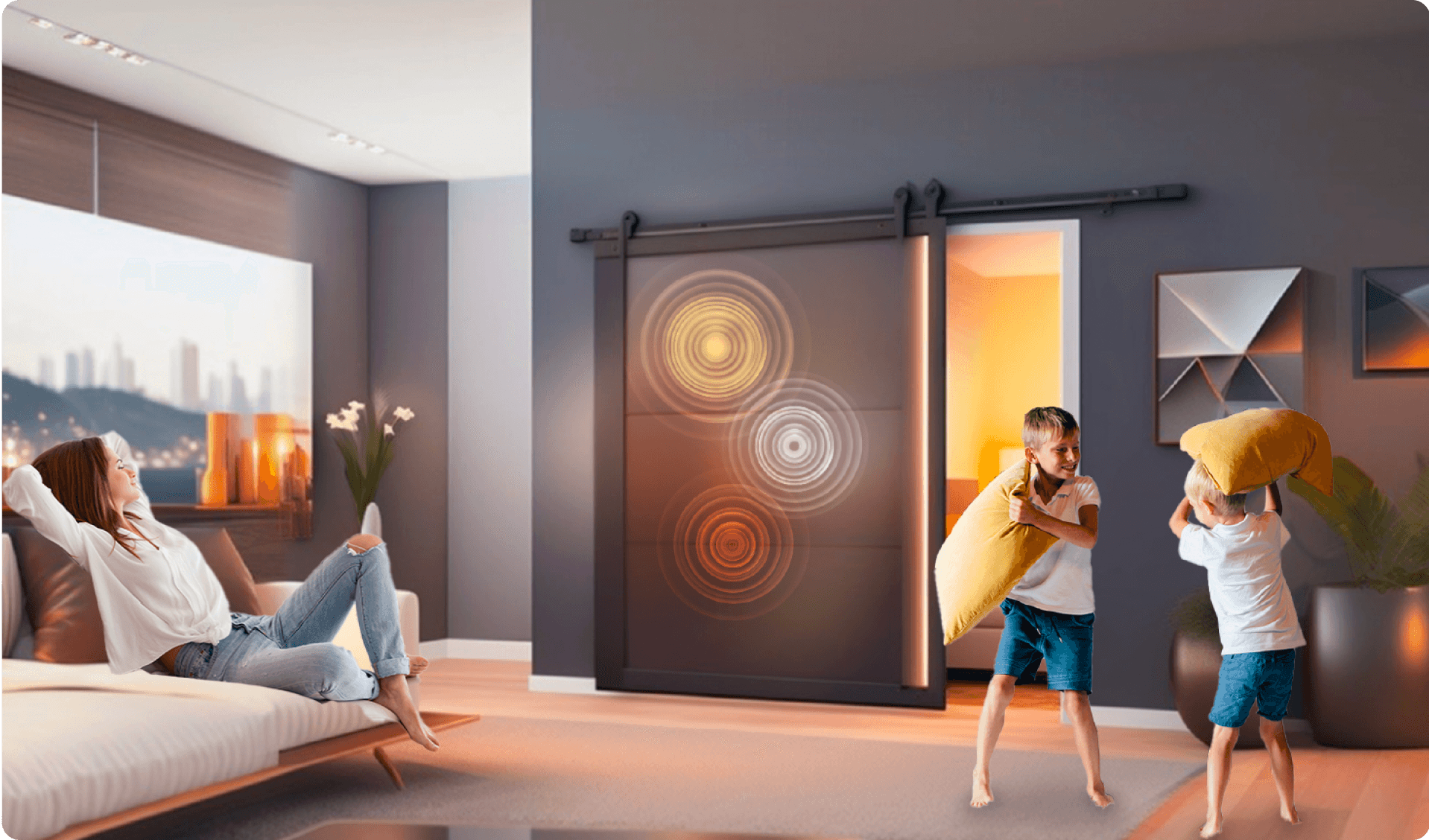
As part of the 'Doors That Do More' concept at Masonite, we designed and articulated a product concept that revolutionizes traditional door functionalities, merging innovative technology with elegant design to redefine the essence of interior spaces. This project allowed us to find a problem around the way we interact with doors, and redesign a future where doors are the heart of the home and bring families together.
The idea is tailored for the future, envisioning advancements in home door interaction. Our goal was to provide an innovative strategy reshaping doors to balance privacy and openness while promoting physical interaction.
brass tacks
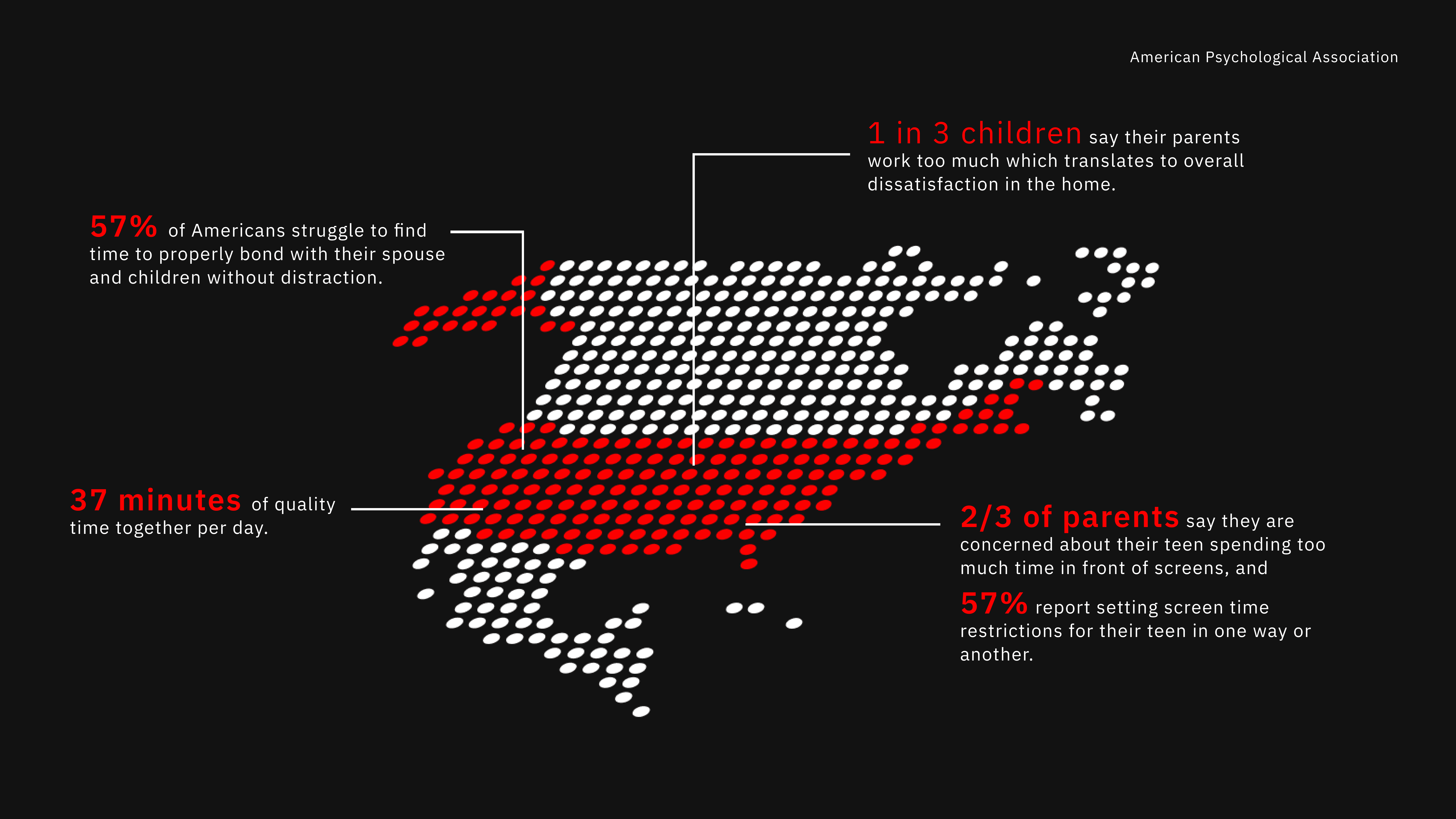
It's no secret that in this digital age, we are all dependent on our devices.
Whether you’re an adult on Facebook or a teenager on TikTok, we all relate to using our device as a means to escape reality and relax especially after a long day. Our devices also make it possible that we never mentally clock out even when we come home because we always have access to work email and messenger.
The result? The quality time we have together in our homes becomes the time we spend in our separate digital worlds.
How might a smart door ecosystem cultivate healthier family routines and relationships?
It might seem like devices and our relationships with them are at the core of disrupted family dynamics. However, there was something more to the issue we sought to uncover. That is, isolating culture is really the heart of the problem, leading to a lonely and detached family.
Research
We supplemented our independent research with the data from Shapiro and Raj where lots of our ideas around doors that do more converged.
We identified three important needs.
- Demand for structurally dynamic and emotionally responsive doors.
- Maintain structural boundaries, and create open spaces for gathering.
- Create doors that address the emotional and functional needs of families.
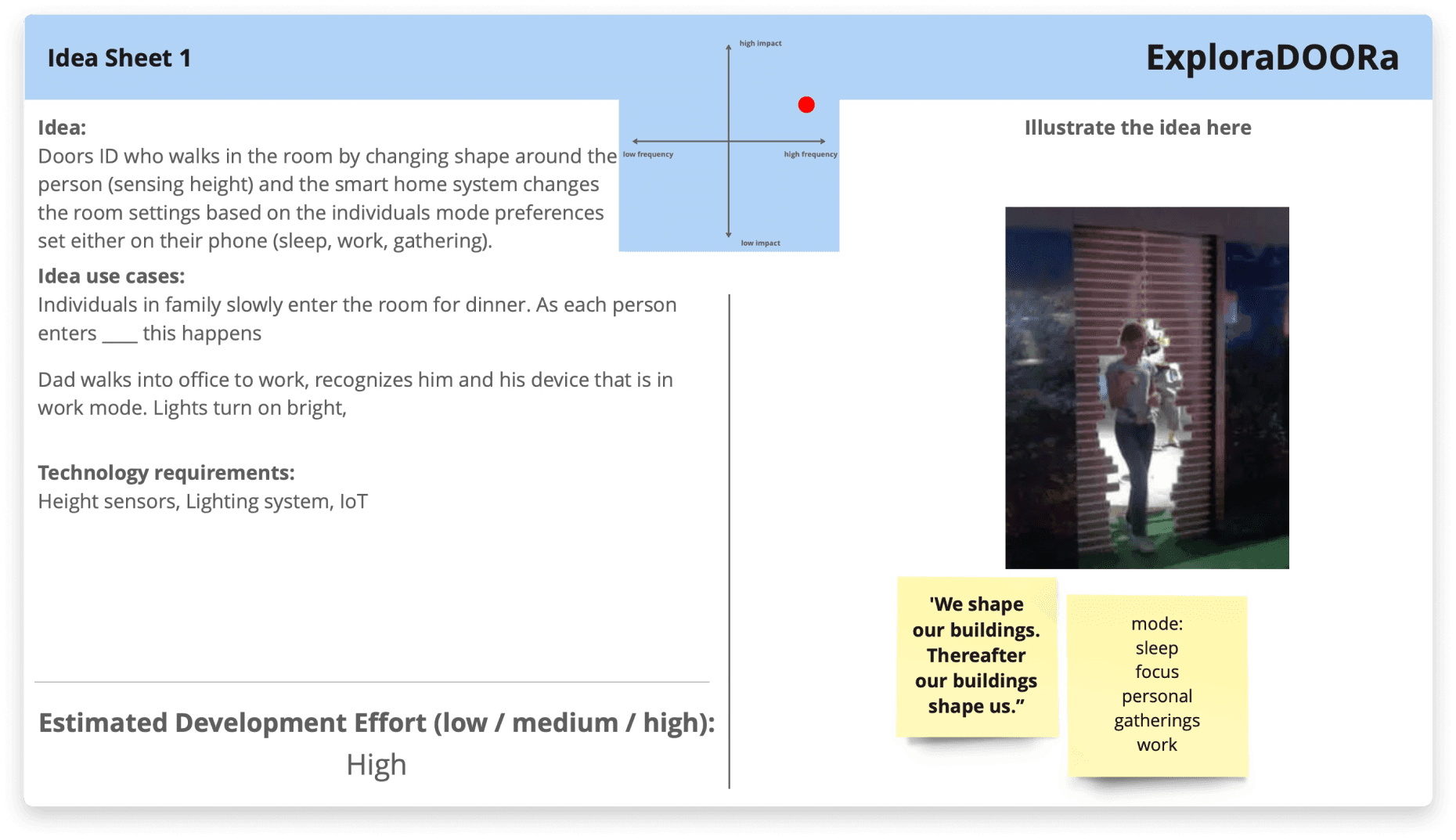
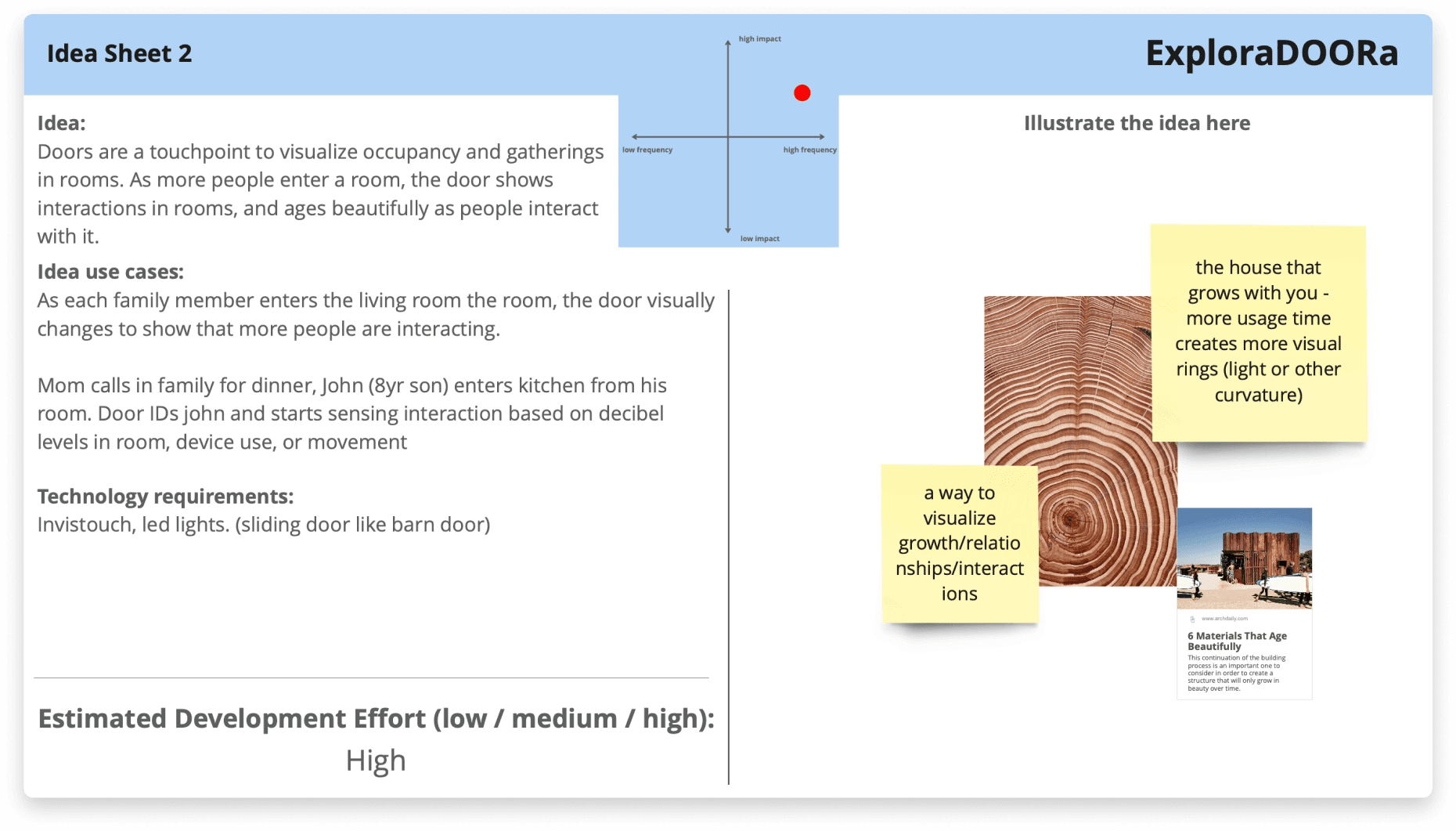
We selected Idea 2 for its intuitive visual feedback, enhancing user engagement and aesthetics. This concept aligns closely with our objective of fostering meaningful interactions within smart home environments. Additionally, Idea 2 requires simpler technology integration and is more cost-effective compared to Idea 1, making it a practical choice within our resources and timeframe.
After much collaborative brainstorming, we've arrived at a concept for a door that can detect emotions and activities, displaying information to encourage interaction. While this may sound futuristic and abstract, I am excited to introduce you to the product "Heartwood" which brings this concept to life.
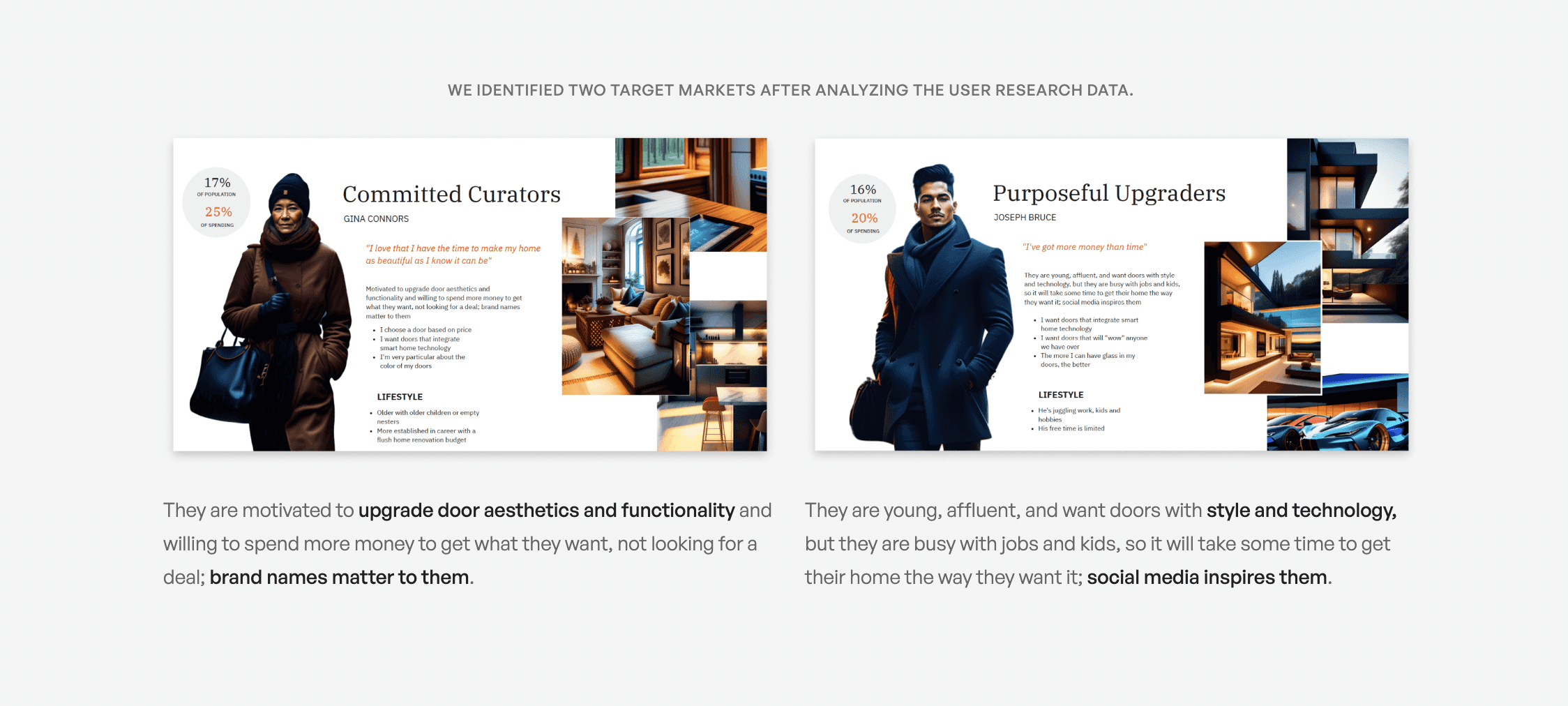
The pain point for a family is changing their habits and routines to make more time for each other.
It starts with being aware or mindful of your daily interactions. However, this doesn’t come easy, especially with everything else on our plate. To understand pain points, we defined and identified the most common factors affecting social isolation and brainstormed ideas on how a door can solve them.
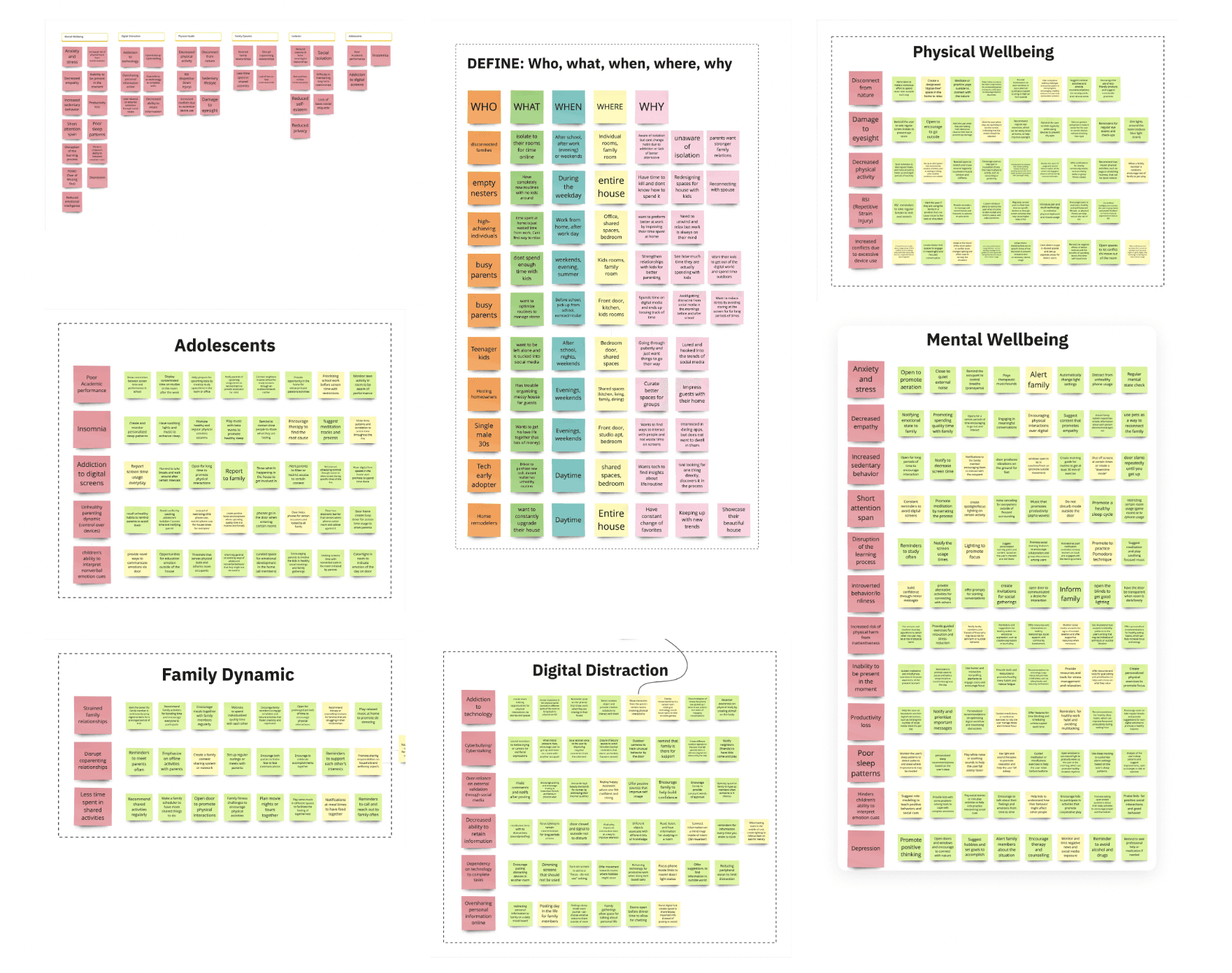
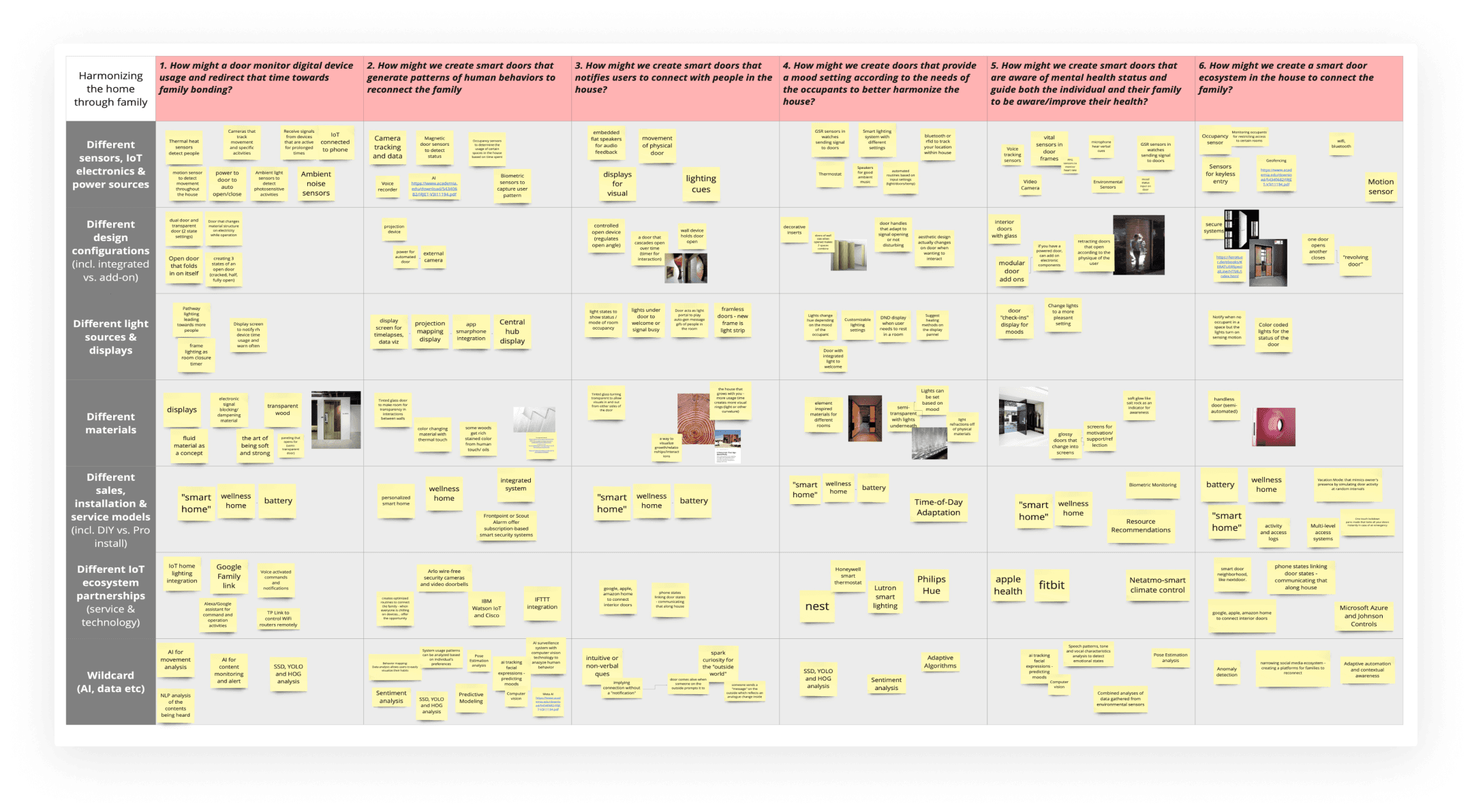
How might a smart door connect a family and disconnect them from their devices?
We used divergent thinking and generated a range of HMW questions to encourage creativity and innovation. Each question prompts us to consider different angles and possibilities, helping us uncover novel solutions. By breaking down the challenge into smaller, more manageable parts, we gained a deeper understanding of the issue at hand.
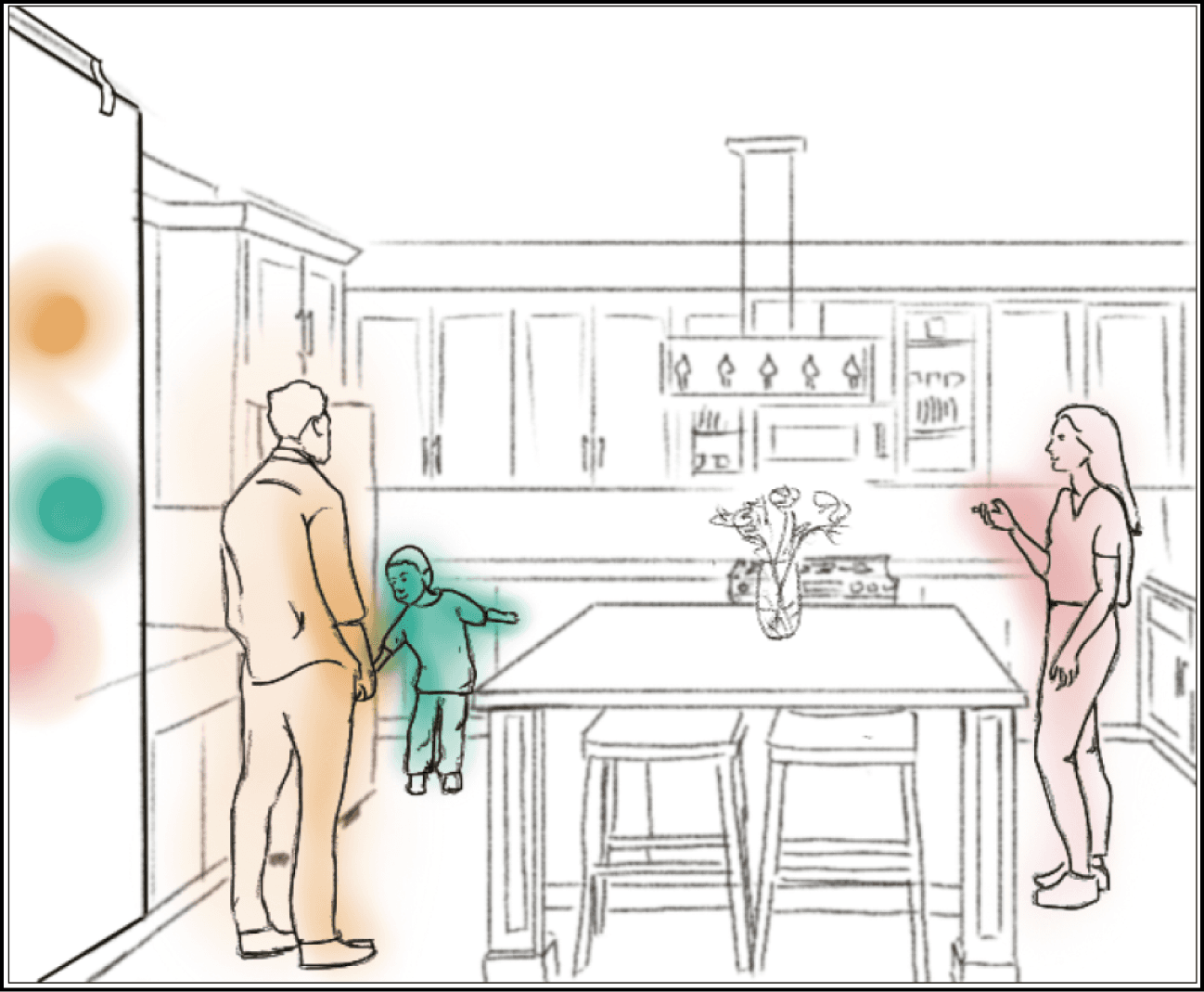
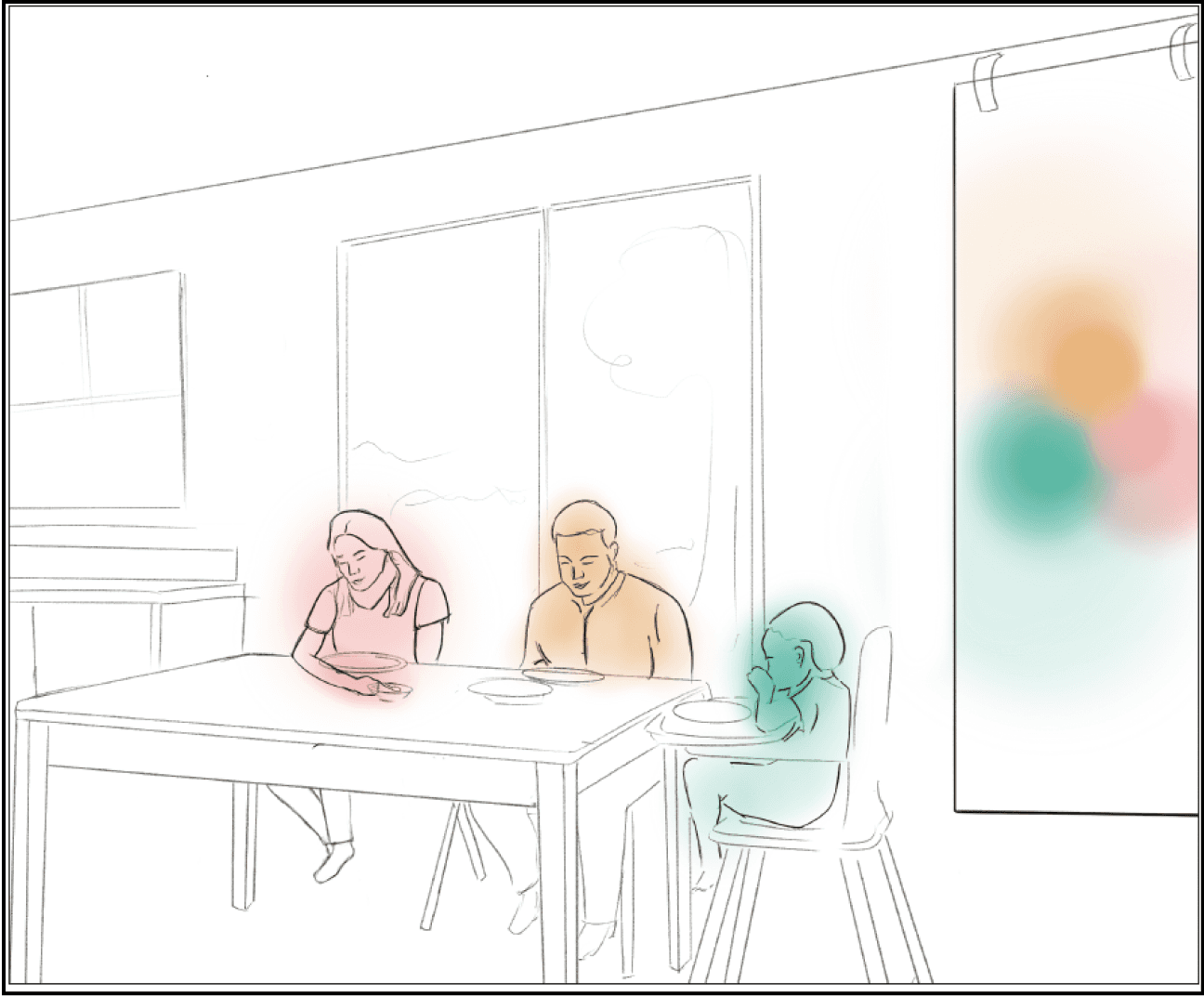
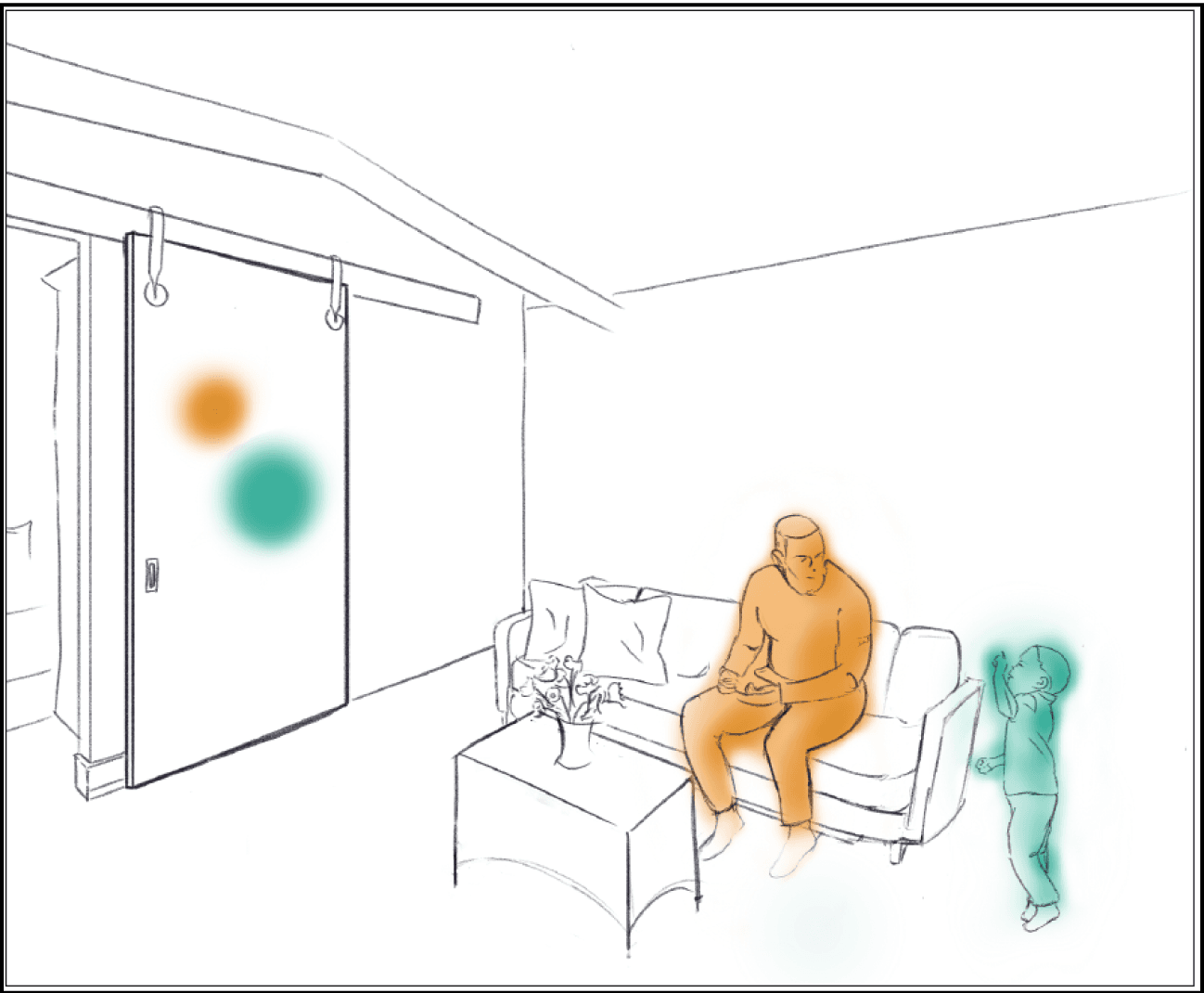
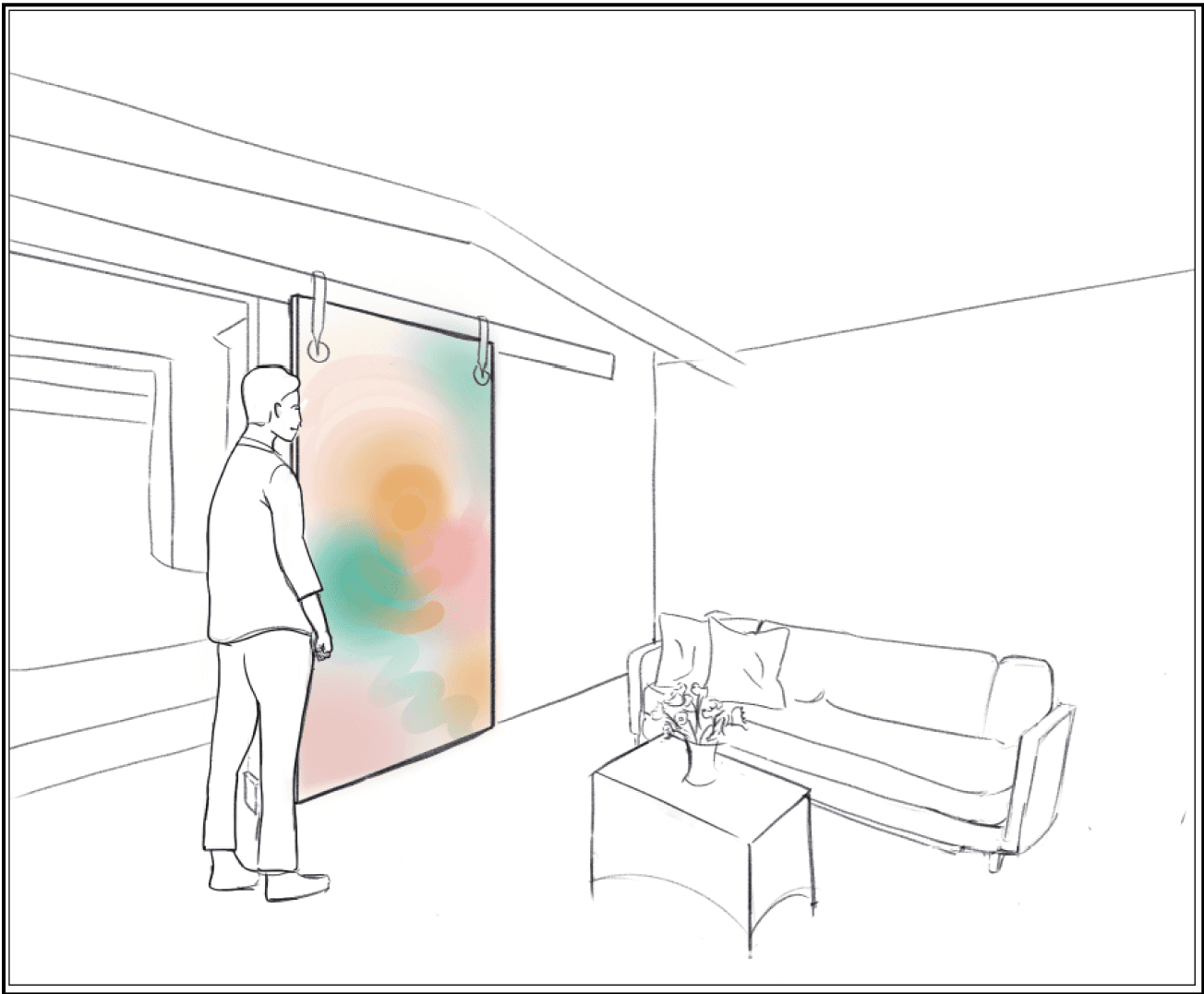
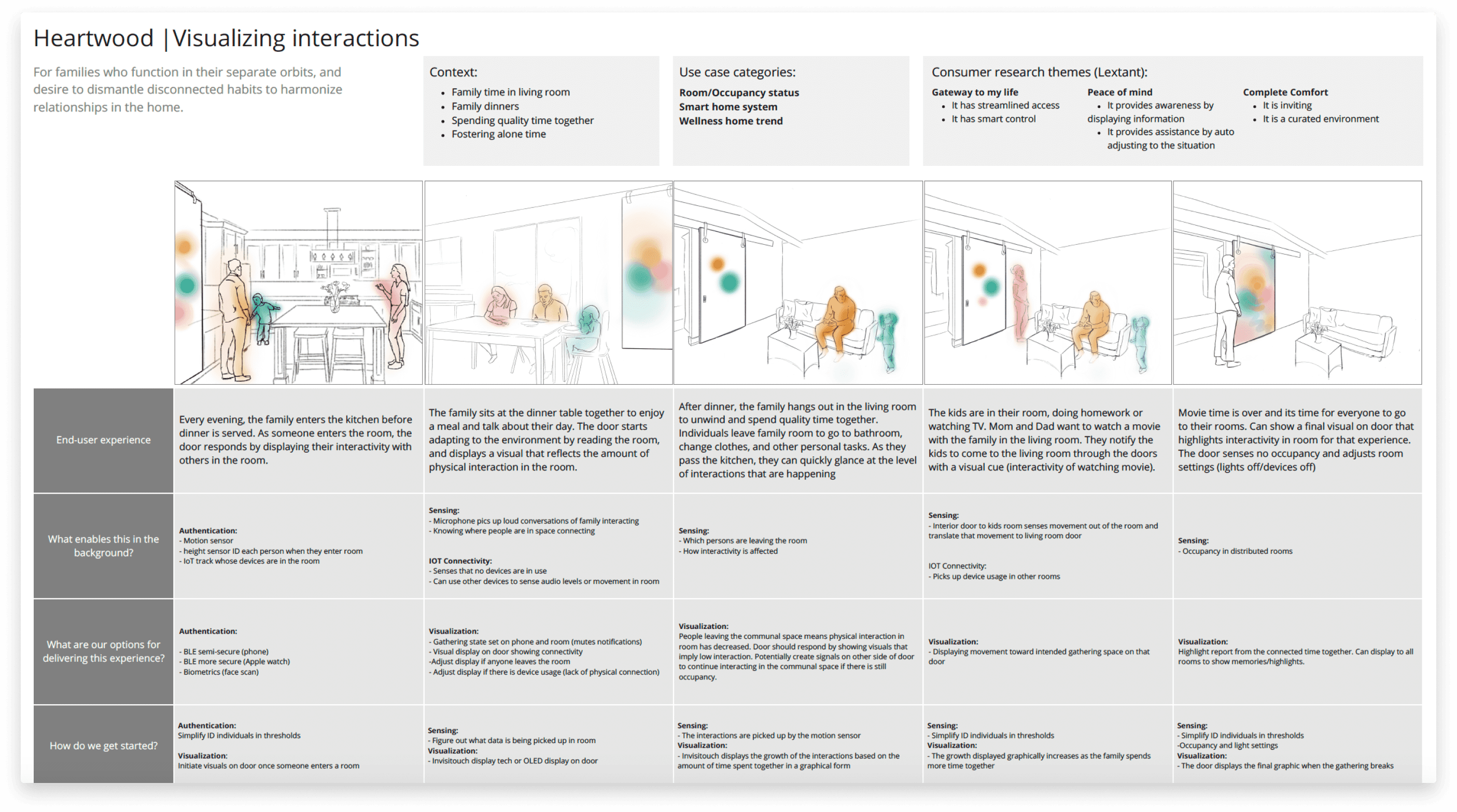
We developed the concept through storyboarding. The most important idea to convey was that the door responds with dynamic visual outputs based on different interactions.
Lots of talking and conversation shows a dynamic visual. Quiet and less engaged may show more static visuals . Quality time may be disrupted reflecting less dynamic visuals.
The final storyboard frame is the "highlights" from the day, which may show visuals and metrics based on how engaged the family was with each other that day
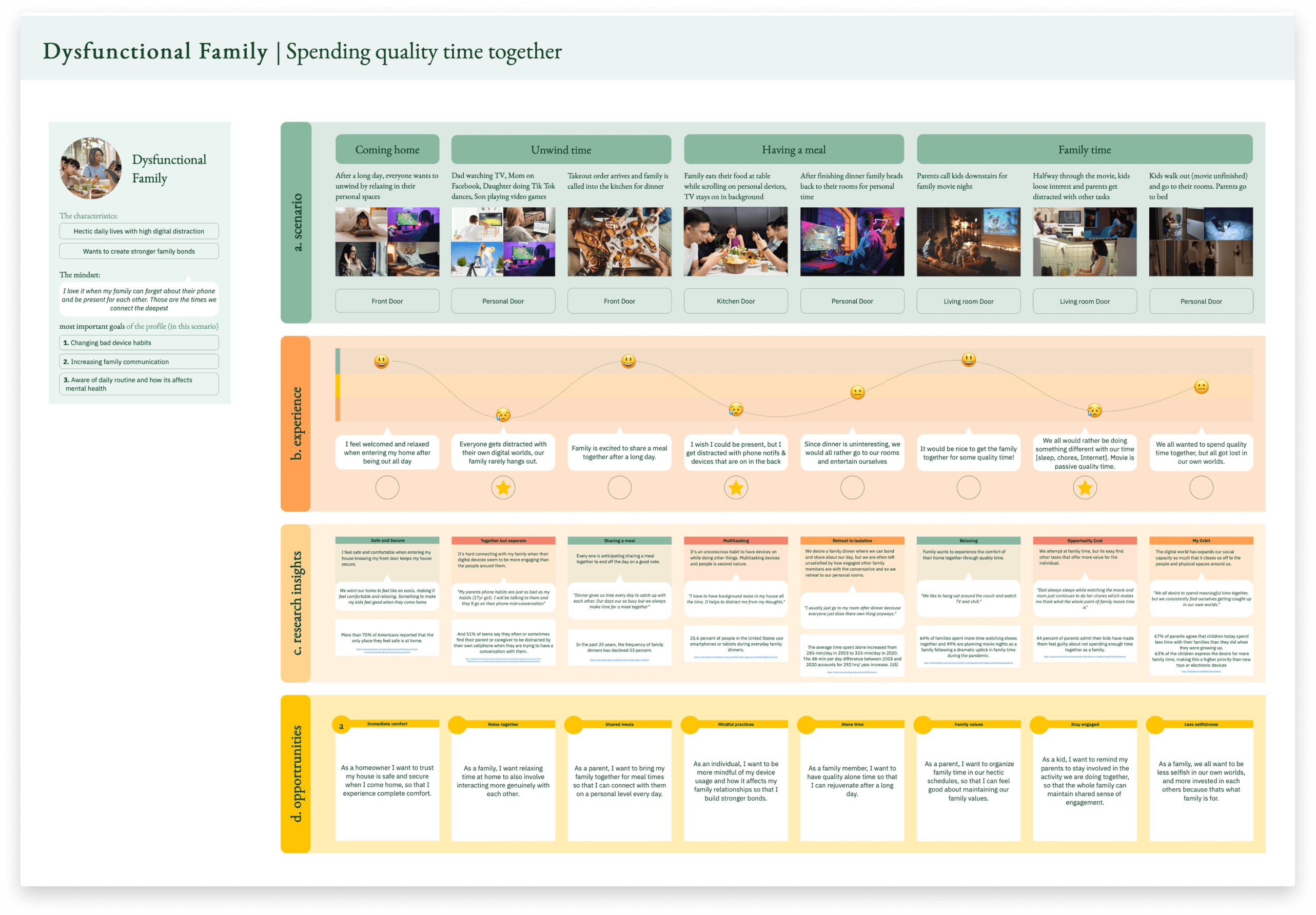
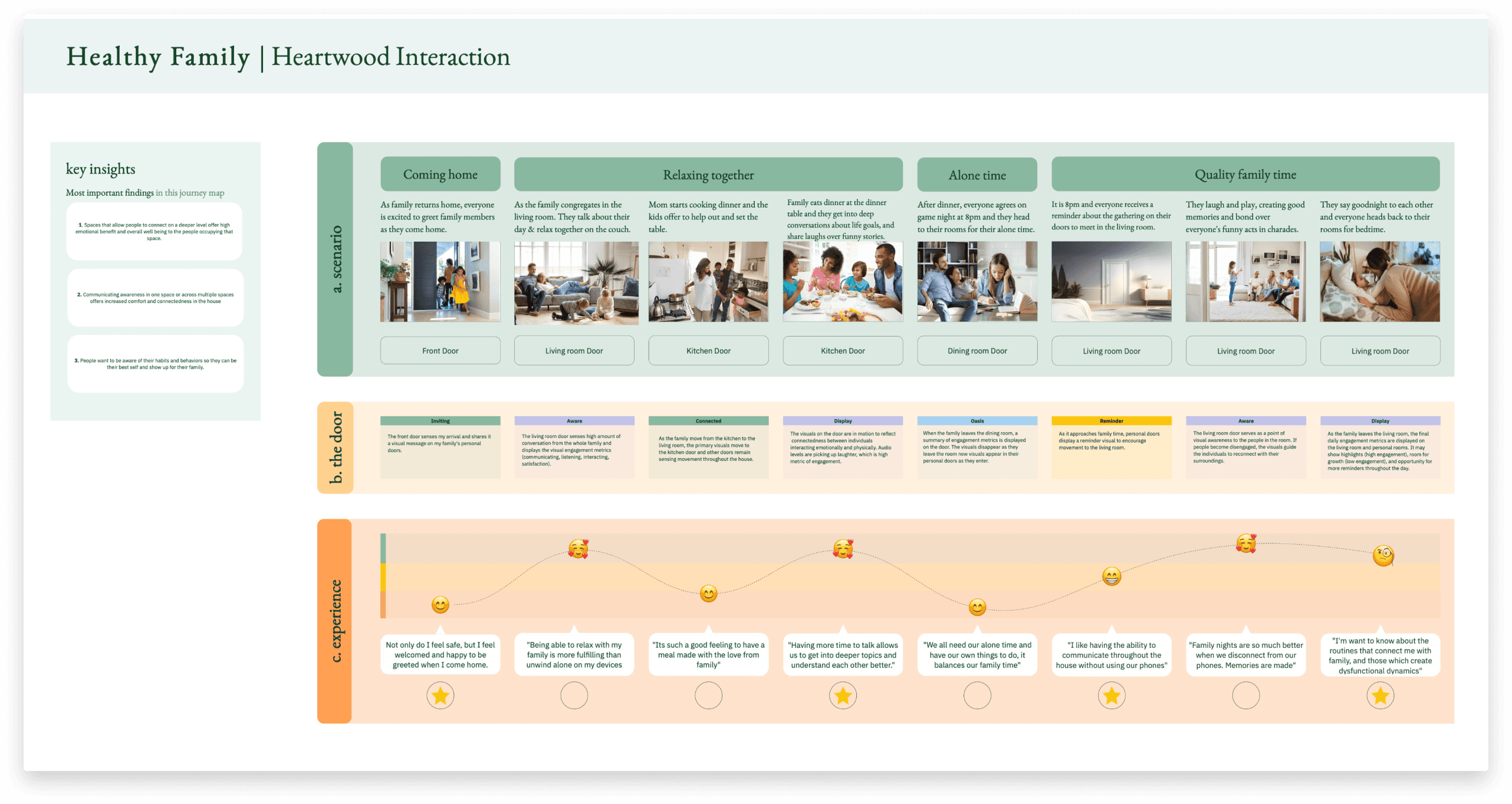
To understand the problem in detail, we drafted a journey map for a dysfunctional family and identified the shortcomings. We then plotted the journey map with Heartwood in action which results in healthy family interactions.
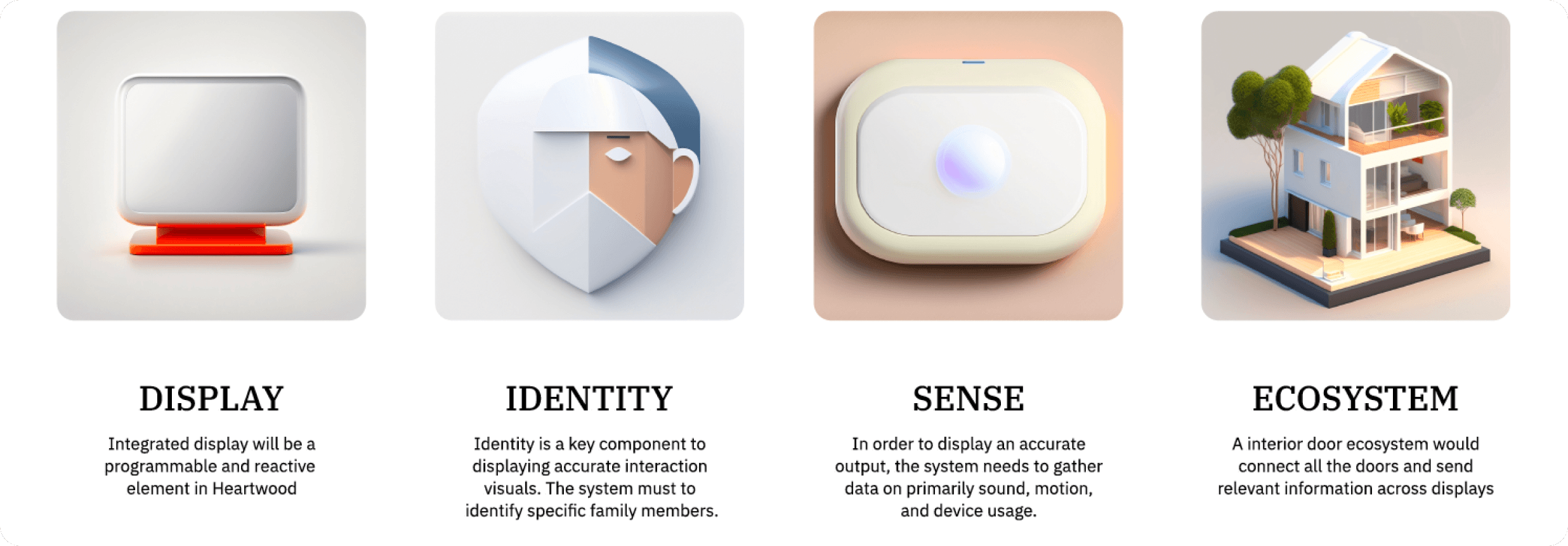
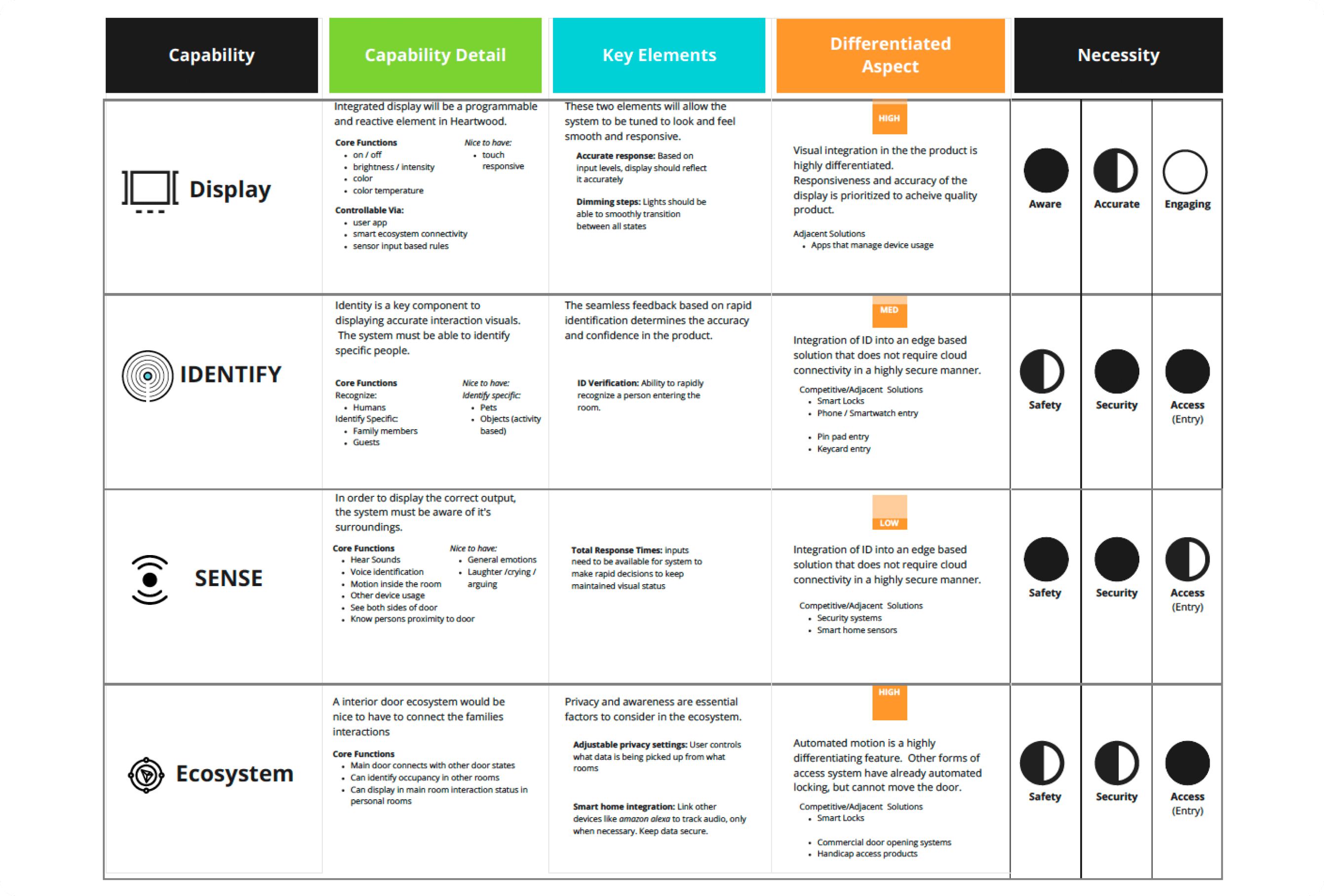
We conducted a technology analysis and established four main capabilities. The identified technological components and their functions were estimated.
We plotted an experience map to lay out the sub-components in the interactions based on the four capabilities.
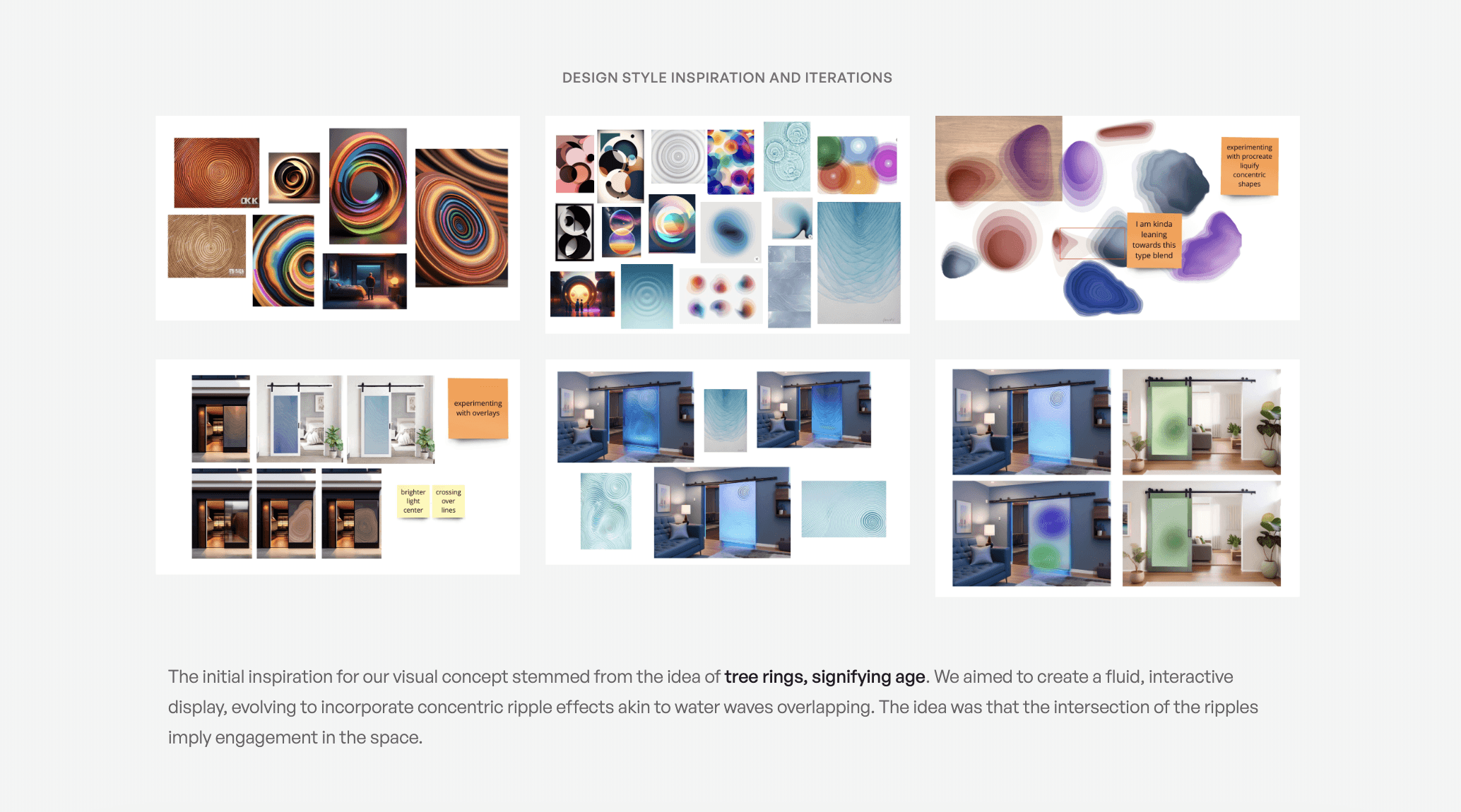
Final Designs: Highlights
The visuals on the door are in the form of ripples interacting with each other reflecting the activities happening in that space. They display different states like occupancy, engagement, disengagement, harmony, and metrics summary.
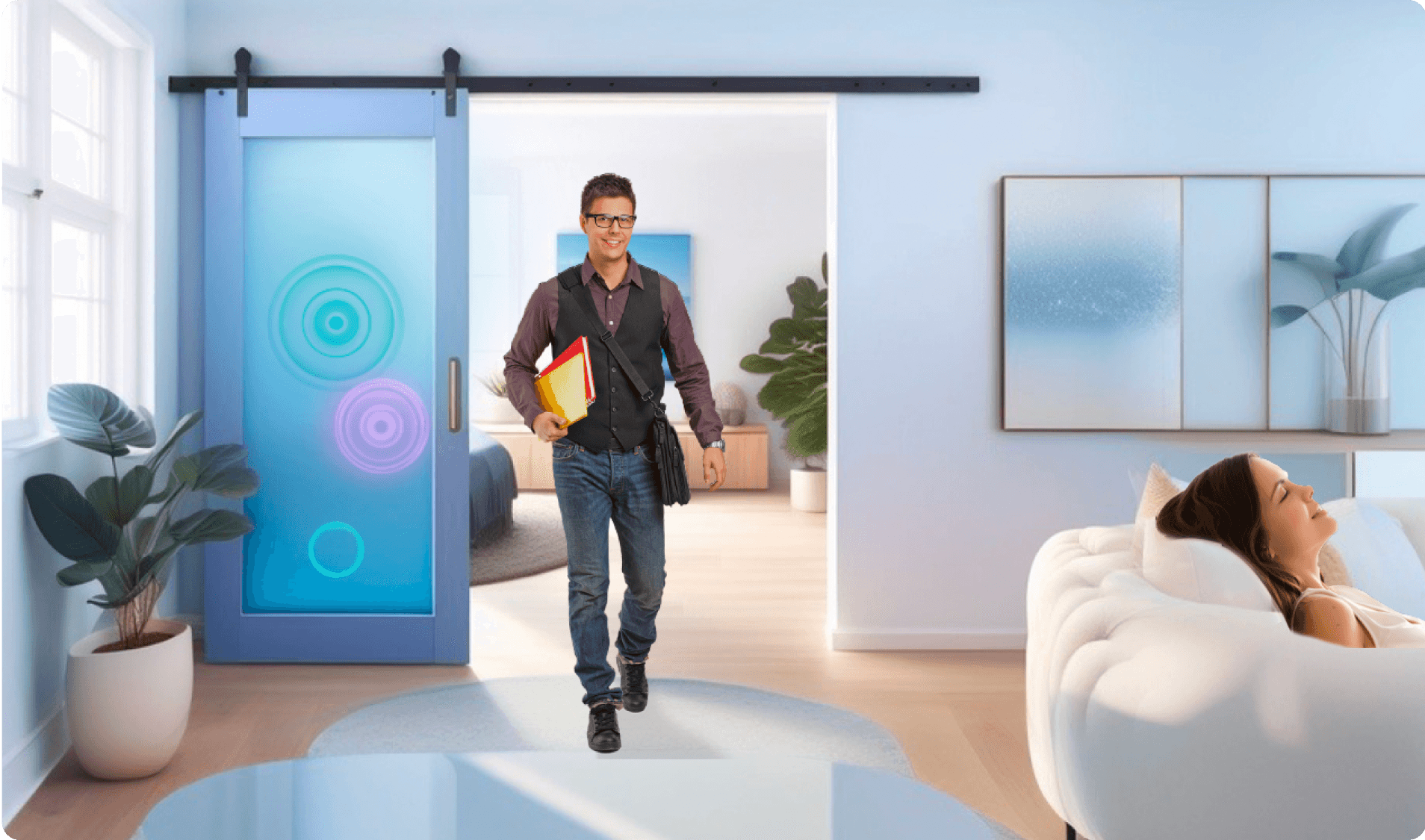
Occupancy - The door continues to monitor the occupancy of rooms and displays the presence of each individual in that room.
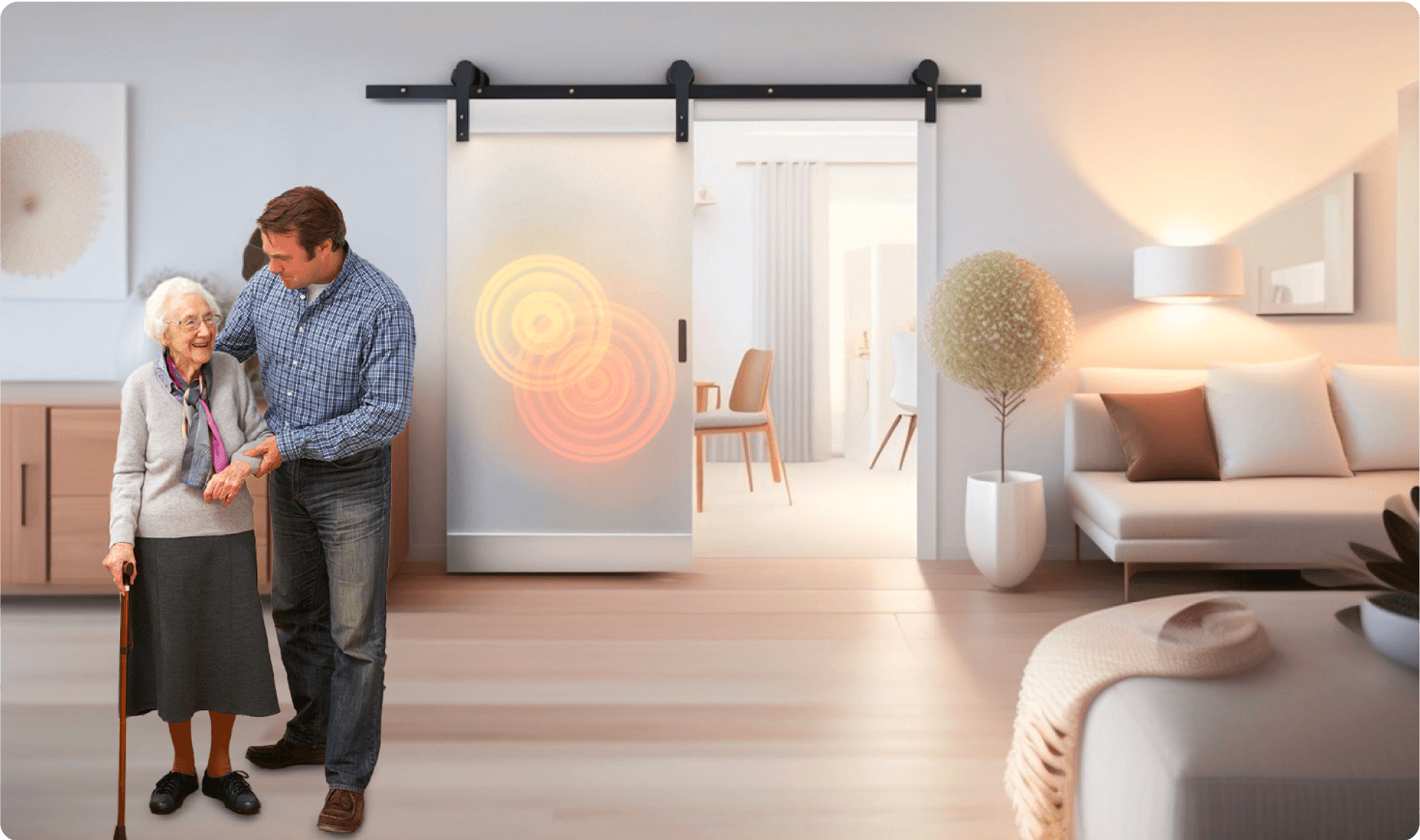
Engaging - When individuals are highly engaged, the door displays a visual that reinforces that positive interaction.
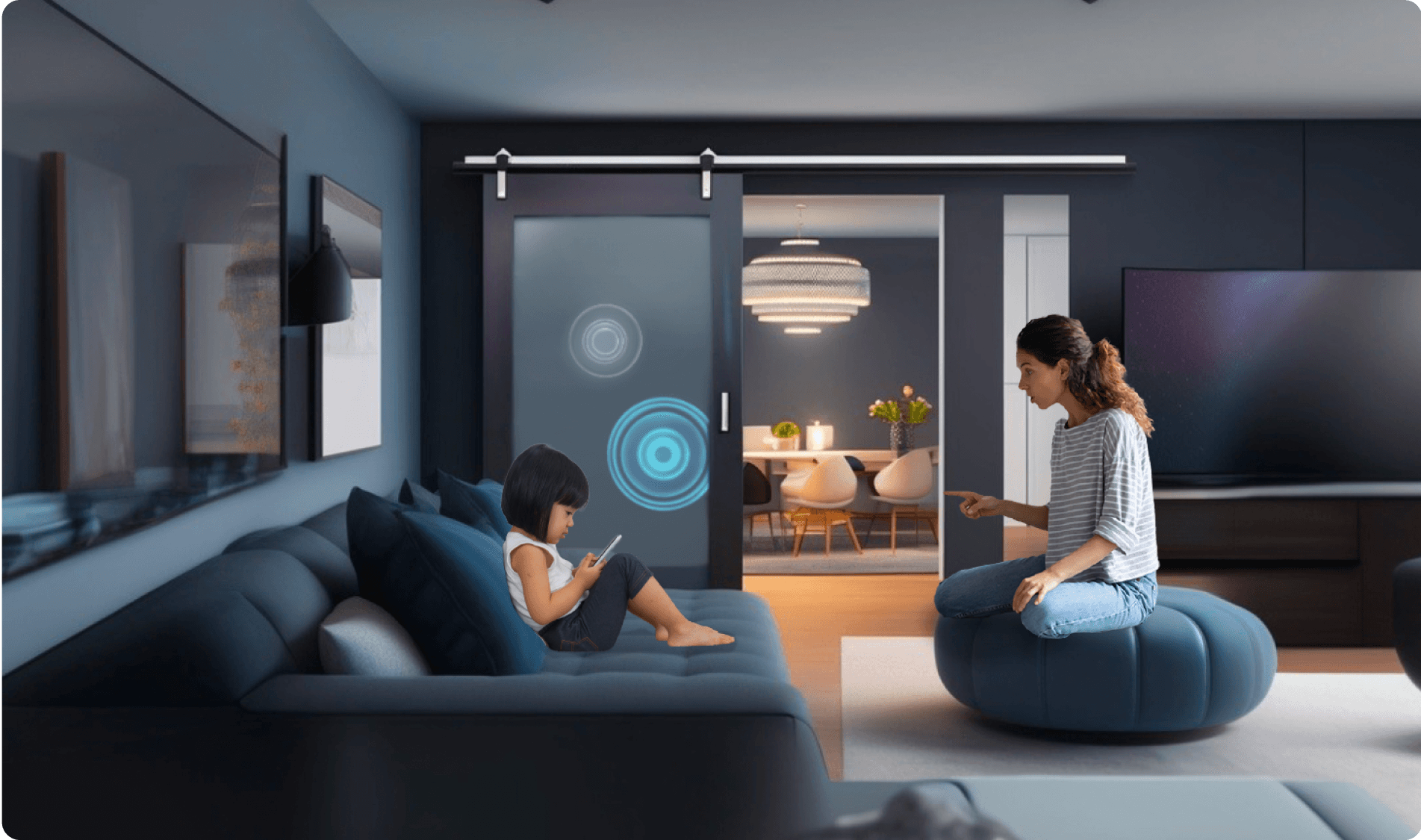
Disengaged - When individuals are distracted by digital devices or not emotionally present, the door displays a negative visual that signals low meaningful interaction.
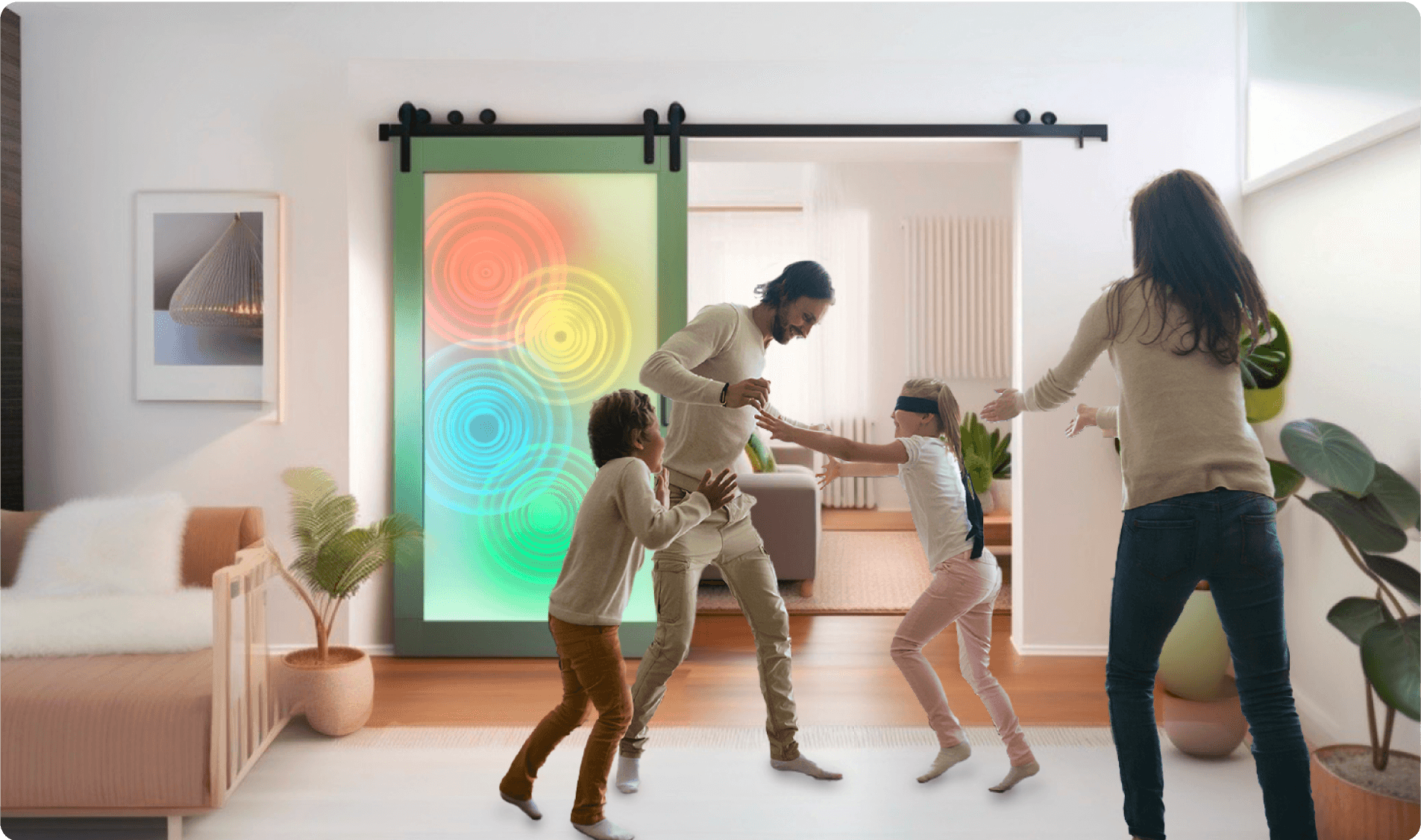
Harmony - When families are spending quality time, with high engagement, the door displays beautiful, harmonious visuals.
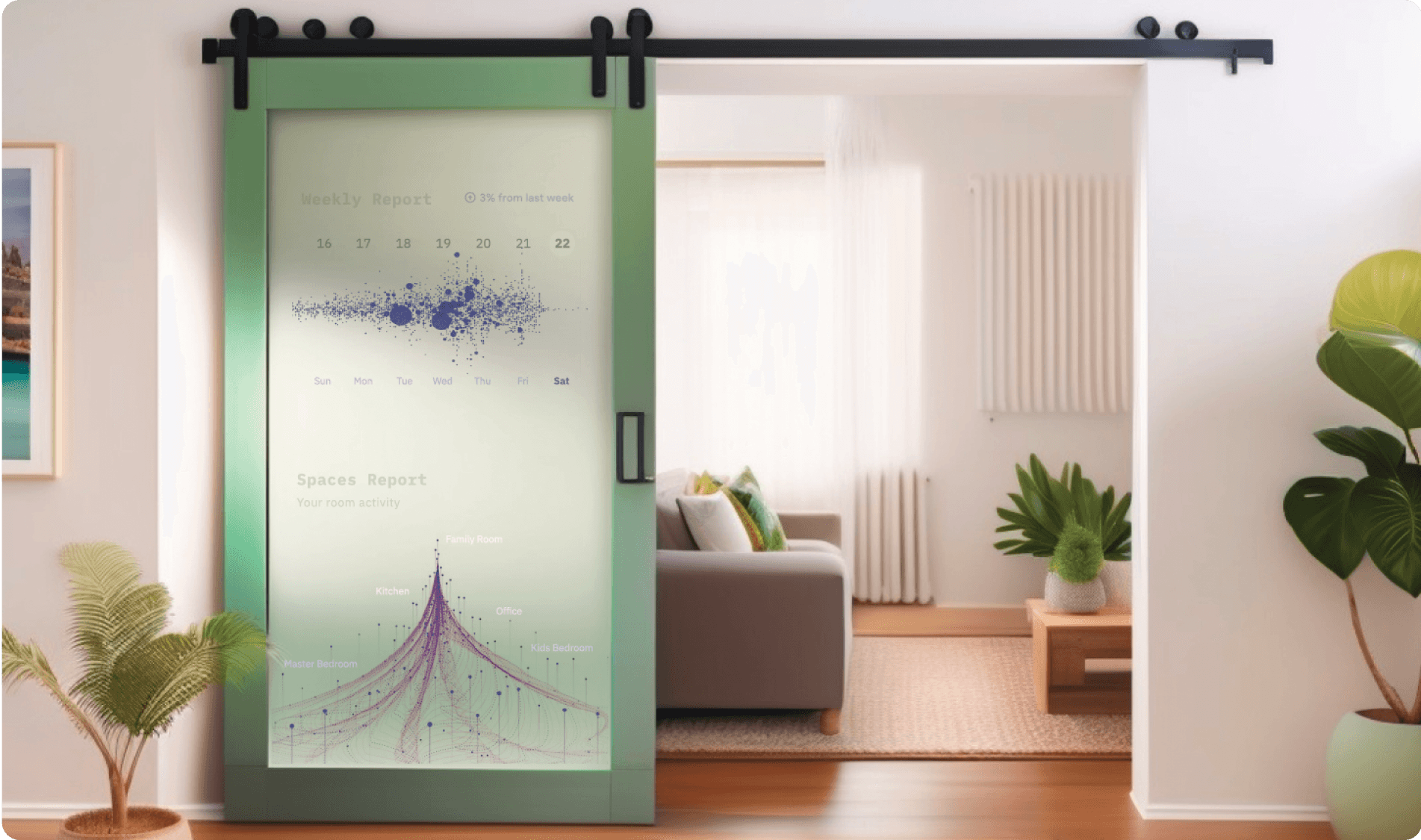
Patterns of behavior - By sensing activity in the house, the door ecosystem can ultimately generate patterns of behavior to inform the family.
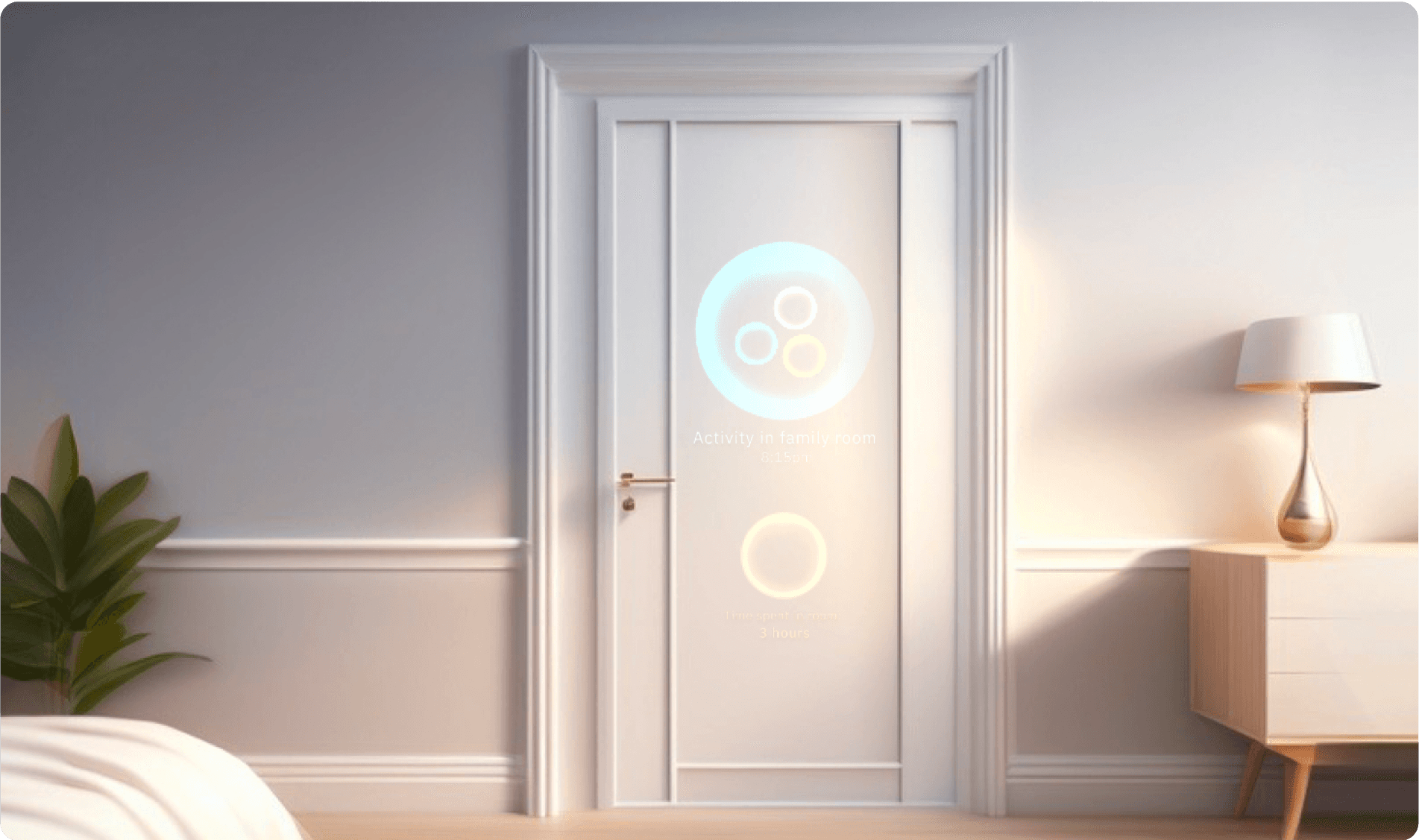
Interior Ecosystem - Personal doors can display activity in other rooms and notify to engage with other rooms & people in the house.
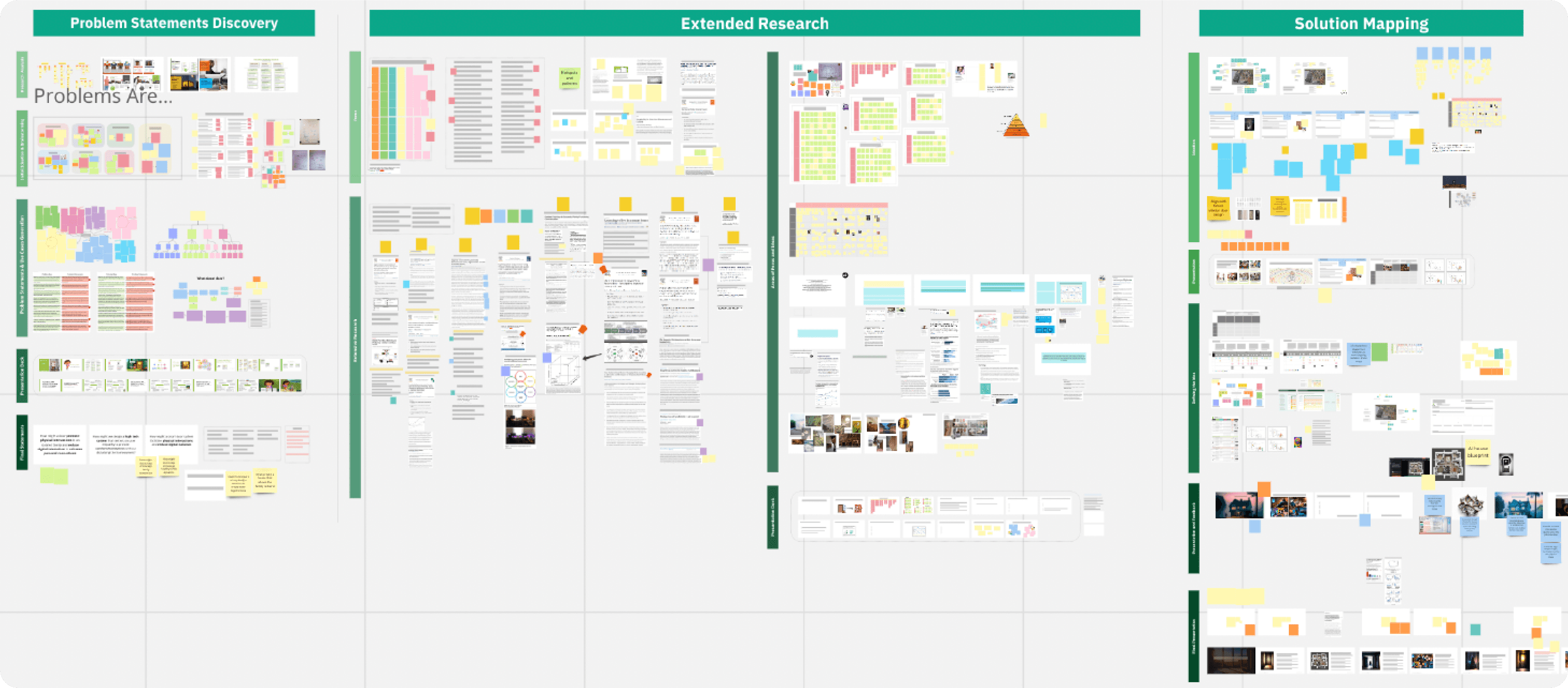
We conducted collaborative research using Miro, that enabled real-time brainstorming, ideation, and organization of ideas.
This project has over 100 pages of research available which I could't present in this case study. A huge amount of work was put into ideation and brainstorming. We started with research and had cycles of iteration on problem statements followed by idea generation and solution mapping.
skills used
UX Research
Usability Tests
Data Analysis
UI Design
team
Me
UX Designer
Designing human-centered door interactions that blends technology with everyday life.
As part of the 'Doors That Do More' concept at Masonite, we designed and articulated a product concept that revolutionizes traditional door functionalities, merging innovative technology with elegant design to redefine the essence of interior spaces. This project allowed us to find a problem around the way we interact with doors, and redesign a future where doors are the heart of the home and bring families together.
The idea is tailored for the future, envisioning advancements in home door interaction. Our goal was to provide an innovative strategy reshaping doors to balance privacy and openness while promoting physical interaction.
It's no secret that in this digital age, we are all dependent on our devices.
Whether you’re an adult on Facebook or a teenager on TikTok, we all relate to using our device as a means to escape reality and relax especially after a long day. Our devices also make it possible that we never mentally clock out even when we come home because we always have access to work email and messenger.
The result? The quality time we have together in our homes becomes the time we spend in our separate digital worlds.
How might a smart door ecosystem cultivate healthier family routines and relationships?
It might seem like devices and our relationships with them are at the core of disrupted family dynamics. However, there was something more to the issue we sought to uncover. That is, isolating culture is really the heart of the problem, leading to a lonely and detached family.
Research
We supplemented our independent research with the data from Shapiro and Raj where lots of our ideas around doors that do more converged.
We identified three important needs.
- Demand for structurally dynamic and emotionally responsive doors.
- Maintain structural boundaries, and create open spaces for gathering.
- Create doors that address the emotional and functional needs of families.
The pain point for a family is changing their habits and routines to make more time for each other.
It starts with being aware or mindful of your daily interactions. However, this doesn’t come easy, especially with everything else on our plate. To understand pain points, we defined and identified the most common factors affecting social isolation and brainstormed ideas on how a door can solve them.
How might a smart door connect a family and disconnect them from their devices?
We used divergent thinking and generated a range of HMW questions to encourage creativity and innovation. Each question prompts us to consider different angles and possibilities, helping us uncover novel solutions. By breaking down the challenge into smaller, more manageable parts, we gained a deeper understanding of the issue at hand.
We developed the concept through storyboarding. The most important idea to convey was that the door responds with dynamic visual outputs based on different interactions.
Lots of talking and conversation shows a dynamic visual. Quiet and less engaged may show more static visuals . Quality time may be disrupted reflecting less dynamic visuals.
The final storyboard frame is the "highlights" from the day, which may show visuals and metrics based on how engaged the family was with each other that day
Final Designs: Highlights
The visuals on the door are in the form of ripples interacting with each other reflecting the activities happening in that space. They display different states like occupancy, engagement, disengagement, harmony, and metrics summary.
We conducted collaborative research using Miro, that enabled real-time brainstorming, ideation, and organization of ideas.
This project has over 100 pages of research available which I could't present in this case study. A huge amount of work was put into ideation and brainstorming. We started with research and had cycles of iteration on problem statements followed by idea generation and solution mapping.
After much collaborative brainstorming, we've arrived at a concept for a door that can detect emotions and activities, displaying information to encourage interaction. While this may sound futuristic and abstract, I am excited to introduce you to the product "Heartwood" which brings this concept to life.
To understand the problem in detail, we drafted a journey map for a dysfunctional family and identified the shortcomings. We then plotted the journey map with Heartwood in action which results in healthy family interactions.
We conducted a technology analysis and established four main capabilities. The identified technological components and their functions were estimated.
We plotted an experience map to lay out the sub-components in the interactions based on the four capabilities.
skills used
Product Design
Innovation
Data Analysis
UX Research
Credits
Me
Ava Raterman
Designing human-centered door interactions that blends technology with everyday life.
As part of the 'Doors That Do More' concept at Masonite, we designed and articulated a product concept that revolutionizes traditional door functionalities, merging innovative technology with elegant design to redefine the essence of interior spaces. This project allowed us to find a problem around the way we interact with doors, and redesign a future where doors are the heart of the home and bring families together.
The idea is tailored for the future, envisioning advancements in home door interaction. Our goal was to provide an innovative strategy reshaping doors to balance privacy and openness while promoting physical interaction.
It's no secret that in this digital age, we are all dependent on our devices.
Whether you’re an adult on Facebook or a teenager on TikTok, we all relate to using our device as a means to escape reality and relax especially after a long day. Our devices also make it possible that we never mentally clock out even when we come home because we always have access to work email and messenger.
The result? The quality time we have together in our homes becomes the time we spend in our separate digital worlds.
How might a smart door ecosystem cultivate healthier family routines and relationships?
It might seem like devices and our relationships with them are at the core of disrupted family dynamics. However, there was something more to the issue we sought to uncover. That is, isolating culture is really the heart of the problem, leading to a lonely and detached family.
Research
We supplemented our independent research with the data from Shapiro and Raj where lots of our ideas around doors that do more converged.
We identified three important needs.
- Demand for structurally dynamic and emotionally responsive doors.
- Maintain structural boundaries, and create open spaces for gathering.
- Create doors that address the emotional and functional needs of families.
The pain point for a family is changing their habits and routines to make more time for each other.
It starts with being aware or mindful of your daily interactions. However, this doesn’t come easy, especially with everything else on our plate. To understand pain points, we defined and identified the most common factors affecting social isolation and brainstormed ideas on how a door can solve them.
How might a smart door connect a family and disconnect them from their devices?
We used divergent thinking and generated a range of HMW questions to encourage creativity and innovation. Each question prompts us to consider different angles and possibilities, helping us uncover novel solutions. By breaking down the challenge into smaller, more manageable parts, we gained a deeper understanding of the issue at hand.
We developed the concept through storyboarding. The most important idea to convey was that the door responds with dynamic visual outputs based on different interactions.
Lots of talking and conversation shows a dynamic visual. Quiet and less engaged may show more static visuals . Quality time may be disrupted reflecting less dynamic visuals.
The final storyboard frame is the "highlights" from the day, which may show visuals and metrics based on how engaged the family was with each other that day
Final Designs: Highlights
The visuals on the door are in the form of ripples interacting with each other reflecting the activities happening in that space. They display different states like occupancy, engagement, disengagement, harmony, and metrics summary.
We conducted collaborative research using Miro, that enabled real-time brainstorming, ideation, and organization of ideas.
This project has over 100 pages of research available which I could't present in this case study. A huge amount of work was put into ideation and brainstorming. We started with research and had cycles of iteration on problem statements followed by idea generation and solution mapping.
After much collaborative brainstorming, we've arrived at a concept for a door that can detect emotions and activities, displaying information to encourage interaction. While this may sound futuristic and abstract, I am excited to introduce you to the product "Heartwood" which brings this concept to life.
To understand the problem in detail, we drafted a journey map for a dysfunctional family and identified the shortcomings. We then plotted the journey map with Heartwood in action which results in healthy family interactions.
We conducted a technology analysis and established four main capabilities. The identified technological components and their functions were estimated.
We plotted an experience map to lay out the sub-components in the interactions based on the four capabilities.
We selected Idea 2 for its intuitive visual feedback, enhancing user engagement and aesthetics. This concept aligns closely with our objective of fostering meaningful interactions within smart home environments. Additionally, Idea 2 requires simpler technology integration and is more cost-effective compared to Idea 1, making it a practical choice within our resources and timeframe.
Occupancy - The door continues to monitor the occupancy of rooms and displays the presence of each individual in that room.
Engaging - When individuals are highly engaged, the door displays a visual that reinforces that positive interaction.
Disengaged - When individuals are distracted by digital devices or not emotionally present, the door displays a negative visual that signals low meaningful interaction.
Harmony - When families are spending quality time, with high engagement, the door displays beautiful, harmonious visuals.
Patterns of behavior - By sensing activity in the house, the door ecosystem can ultimately generate patterns of behavior to inform the family.
Interior Ecosystem - Personal doors can display activity in other rooms and notify to engage with other rooms & people in the house.